Andrius K. · ProjectsNo. 13 of 18
Rendering study · 2026
Trees
How do you draw a forest so dense that no ground shows through, in a browser, on a laptop, and make it look like the photographs?
- Status
- Ongoing study
- Species
- Norway spruce, European larch, Arolla pine, silver birch
- Built with
- WebGL2, no libraries; trees grown in a worker
- Where
- headbandno2.com/trees
What it is
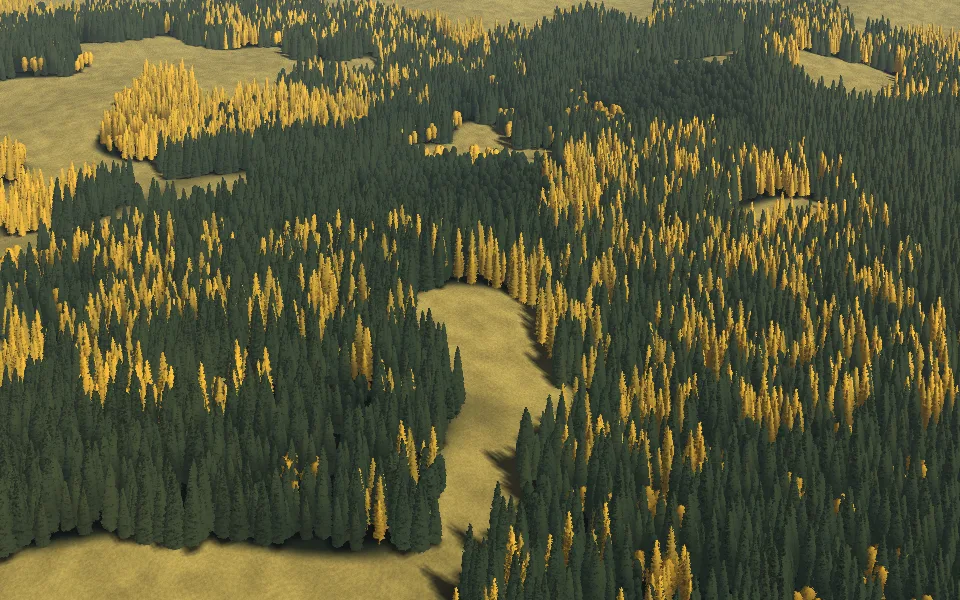
A study of the woods above Verbier, made to answer one question for the Verbier map: how should a forest look from a kilometre away? Four species grow here, each from a number and a set of rules, when it is asked for. The same number always grows the same tree, so nothing has to be stored.
The goal is the far view. In my photographs of the mountain the spruce stand so close that no ground and nothing behind them shows, and the colour depends on whether the sun is on them. The first drawings did neither: you could see straight through the crowns, and the green was far too cheerful.
How it works
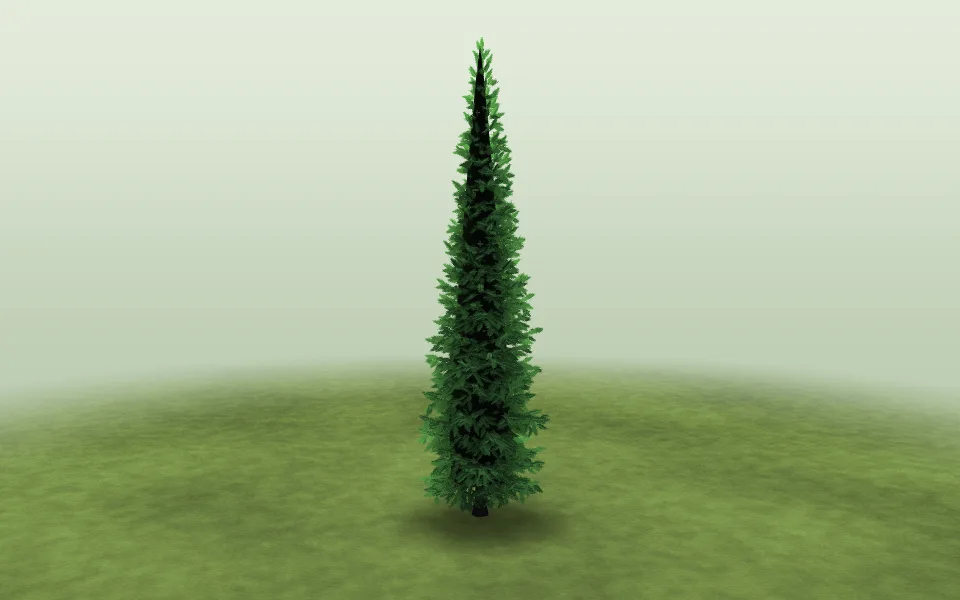
A few specimens are grown in full detail and photographed by the page itself from 64 directions. From then on each tree is a card that faces the viewer and shows the right photograph, lit by the sun of the moment; further away, a whole clump of trees becomes one card. Between levels the change is dissolved pixel by pixel, so the eye never catches the switch. A dark core inside every crown stops the eye going through it.
Up to 685,000 trees on one slope, and you should not be able to see through any of them.
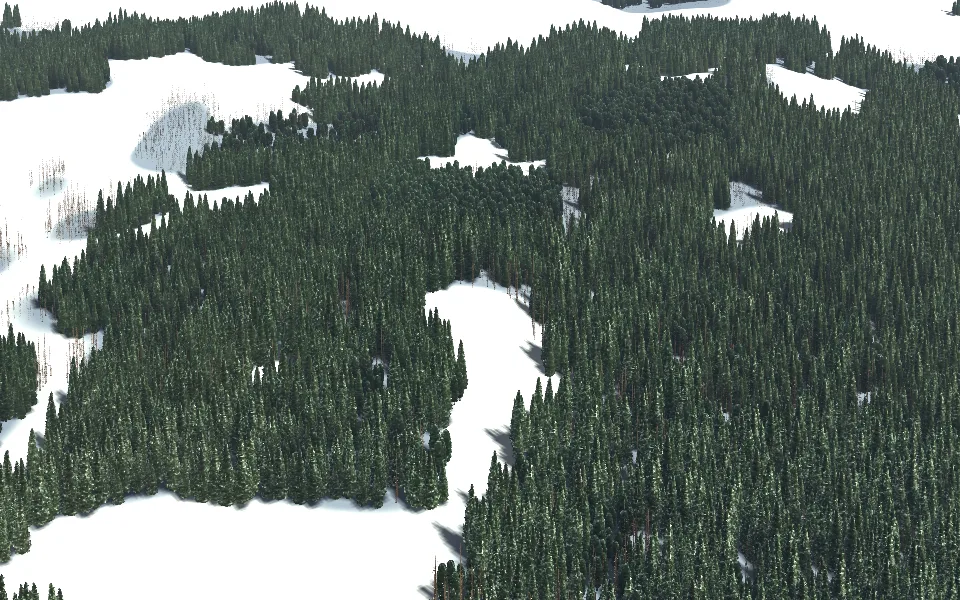
The wood can be made some seven kilometres across. Parts of it are one species alone, parts are mixed, as real woods are. The colours of each season come from schemes chosen by eye against ten photographs of the real place, and snow is laid on each tree where it would actually settle.
Where it went
The trees that passed the test now stand on the real ground of the Verbier map, a wood at a time. The study stays open as a place to try new ways of growing and drawing them.
Have a project like this? Message me on LinkedIn